Category: CloudSec

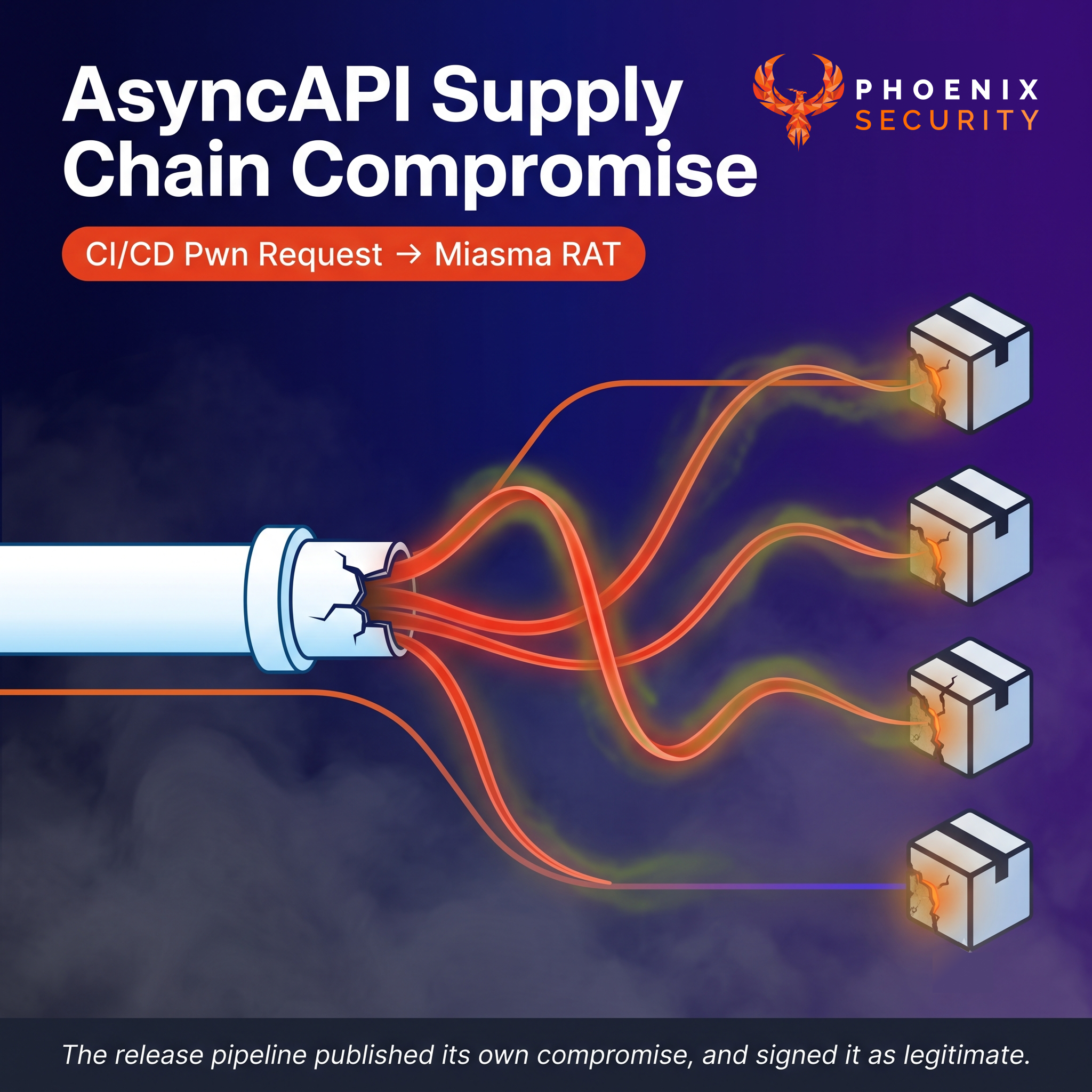
The Miasma npm worm is back with a second wave targeting 57 packages and 647,204 monthly downloads. Wave 2 drops lifecycle hooks and executes through binding.gyp, bypassing every scanner watching package.json. No CVE exists. The threat actor pivoted within 72 hours of public disclosure of Wave 1.
Claire Harwood
IronWorm is a Rust-built npm supply chain worm that distributed a 976 KB eBPF rootkit and Tor C2 across 37 packages from a single compromised account, with no CVE assigned. It uses npm’s own Trusted Publishing OIDC flow to mint publish credentials from CI runners and self-replicate. CVE-based scanners had zero detection surface at the point of compromise.
Daniel Reeves
On June 1, 2026, 32 packages in the @redhat-cloud-services npm scope — totalling 116,991 weekly downloads — were backdoored by Miasma, a new Shai-Hulud variant that steals credentials across AWS, GCP, Azure, and Kubernetes through a preinstall hook. No CVE exists. Every malicious version passed npm Trusted Publishing validation using legitimate OIDC-issued tokens, leaving CVE-dependent scanners with zero detection surface during the active exposure window.
Francesco Cipollone
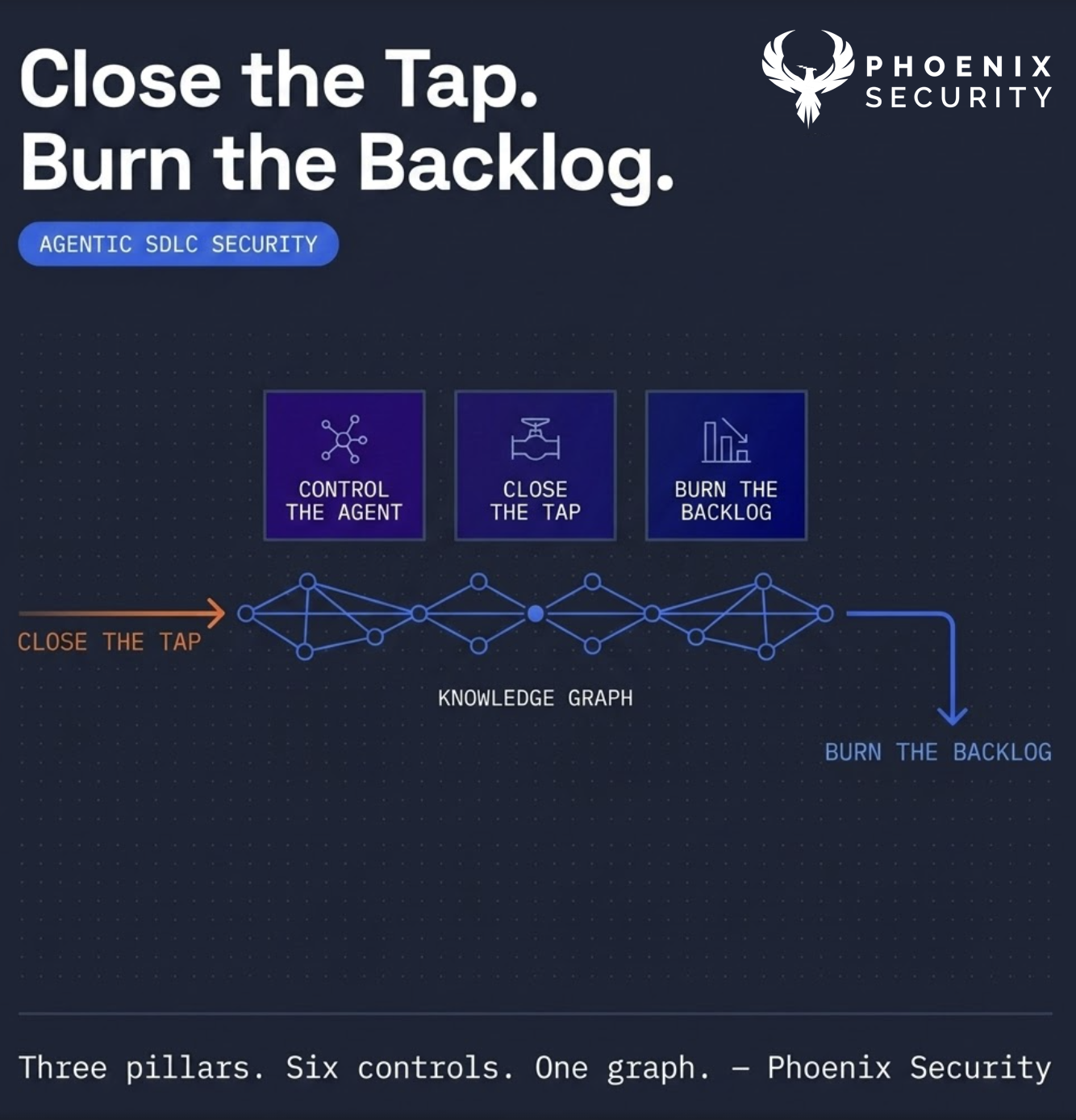
AI now generates working exploits in 10–15 minutes. Verizon’s DBIR confirms software vulnerabilities have overtaken stolen credentials as the top breach entry point. The NCSC and Bank of England have formally demanded automated, at-scale remediation. This analysis breaks down why traditional vulnerability management is broken, what the 2026 supply-chain attack catalogue tells us, and how to close the tap and burn down the backlog before the patch wave hits.
Marcus Webb
TrapDoor is an active supply chain campaign hitting npm, PyPI, and Crates.io simultaneously — 34 malicious packages, 384 artifact versions, confirmed since May 19, 2026. The campaign steals SSH keys, AWS credentials, GitHub tokens, and crypto wallet keystores, while silently poisoning AI coding assistants through hidden zero-width Unicode injected into .cursorrules and CLAUDE.md files. Zero CVEs assigned. Standard scanners return zero findings.
Sarah Mitchell
MEGALODON_CI is an active zero-CVE campaign poisoning GitHub Actions workflow files across 3,500+ confirmed public repositories. Automated commits inject a base64-encoded credential harvester that exfiltrates AWS, GCP, and Azure secrets, OIDC tokens, SSH keys, and package registry credentials in a single runner execution. No CVE exists — every traditional scanner is blind to it.
Sarah Mitchell
TeamPCP (UNC6780) breached GitHub’s internal infrastructure on May 19–20, 2026 through a poisoned VS Code extension that ran silently on a developer’s endpoint and exfiltrated approximately 3,800 internal repositories. The attack produced no CVE. Standard CVE-feed scanners, SCA tools, and signed-provenance checks all missed it. This is exactly the zero-CVE developer trust surface gap Phoenix Blue Intelligence and Phoenix Blue Shield are built to close.
Claire Harwood
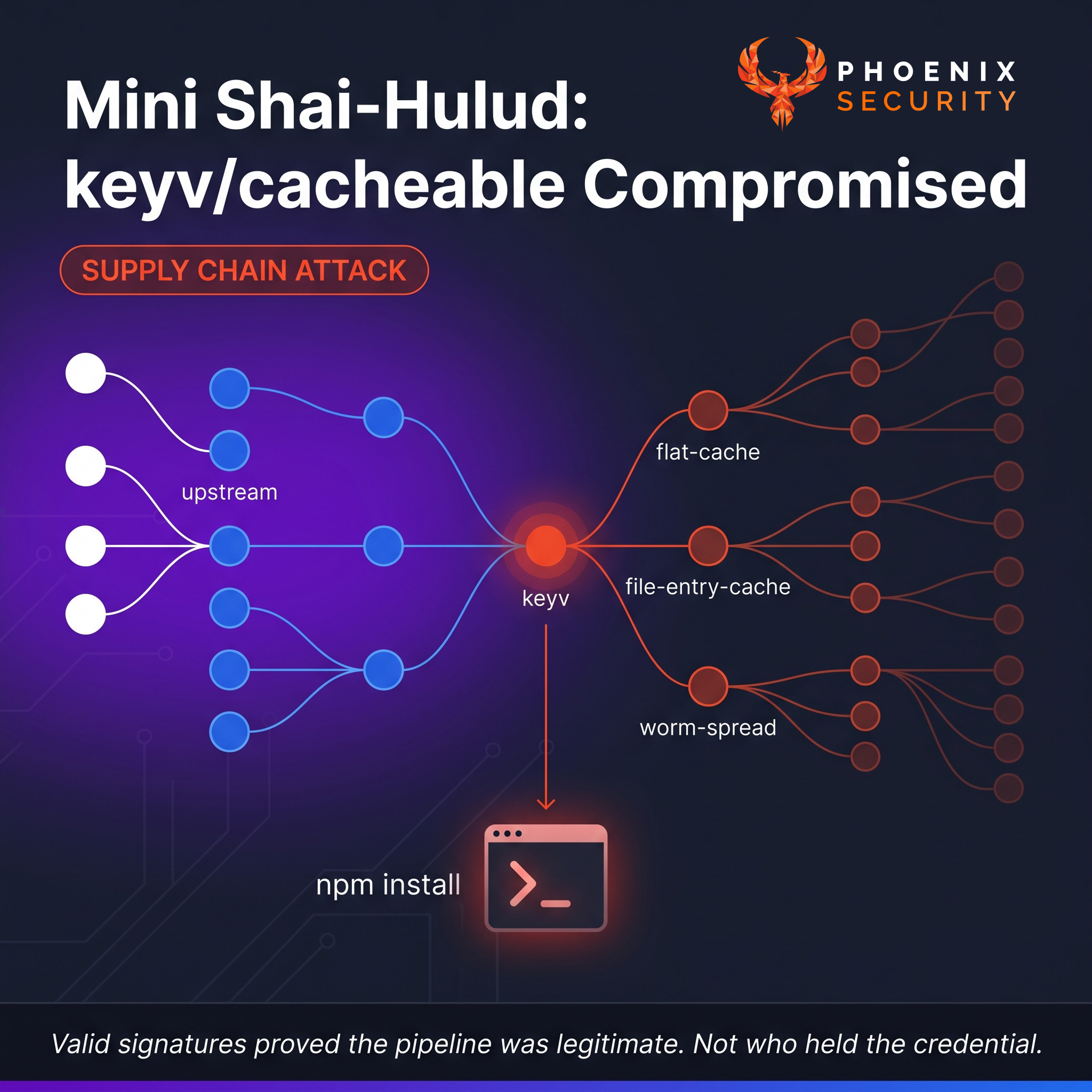
A coordinated npm supply chain attack hit SAP’s Cloud Application Programming Model toolchain on April 29, 2026, branding itself “Mini Shai-Hulud.” Four packages totalling 570,000 weekly downloads were poisoned in a 2-hour window. The payload uses Bun as a runtime to evade Node.js detection, pulls 134 credential paths from infected hosts, dumps GitHub Actions runner memory, and persists through Claude Code SessionStart hooks and VS Code tasks.json folderOpen triggers. Over 1,197 victim repositories were live on GitHub within hours. Zero CVEs assigned.
Francesco Cipollone
Sha1-Hulud V3.0 is not a typical vulnerability — it’s a malicious npm package that executes on install, steals CI and cloud credentials, and weaponizes npm and GitHub tokens to spread further. If it touched your build system, assume compromise.
Francesco Cipollone

Resources

Listen to the latest Phoenix Security  podcast

Listen to the latest AppSec Phoenix podcast

Get Started with AppSec Phoenix

News

Read the latest AppSec Phoenix news

Blog

Read the latest Blogs

Events

Discover our events

Talks

Explore the talks

Whitepapers

Discover Whitepapers

News

Read the latest News

Videos

Discover video resources

Welcome to Peace of Mind

Trusted by more than 1000 users and 380 organizations

Dashboard
Derek

Derek Fisher

Head of product security at a global fintech

Derek Fisher – Head of product security at a global fintech. Speaker, instructor, and author in application security.

Derek is an award winning author of a children’s book series in cybersecurity as well as the author of “The Application Security Handbook.” He is a university instructor at Temple University where he teaches software development security to undergraduate and graduate students. He is a speaker on topics in the cybersecurity space and has led teams, large and small, at organizations in the healthcare and financial industries. He has built and matured information security teams as well as implemented organizational information security strategies to reduce the organizations risk.

Derek got his start in the hardware engineering space where he learned about designing circuits and building assemblies for commercial and military applications. He later pursued a computer science degree in order to advance a career in software development. This is where Derek was introduced to cybersecurity and soon caught the bug. He found a mentor to help him grow in cybersecurity and then pursued a graduate degree in the subject.

Since then Derek has worked in the product security space as an architect and leader. He has led teams to deliver more secure software in organizations from multiple industries. His focus has been to raise the security awareness of the engineering organization while maintaining a practice of secure code development, delivery, and operations.

In his role, Jeevan handles a range of tasks, from architecting security solutions to collaborating with Engineering Leadership to address security vulnerabilities at scale and embed security into the fabric of the organization.

Jeevan Singh

Jeevan Singh

Founder of Manicode Security

Jeevan Singh is the Director of Security Engineering at Rippling, with a background spanning various Engineering and Security leadership roles over the course of his career. He’s dedicated to the integration of security practices into software development, working to create a security-aware culture within organizations and imparting security best practices to the team.
In his role, Jeevan handles a range of tasks, from architecting security solutions to collaborating with Engineering Leadership to address security vulnerabilities at scale and embed security into the fabric of the organization.

James

James Berthoty

Founder of Latio Tech

James Berthoty has over ten years of experience across product and security domains. He founded Latio Tech to help companies find the right security tools for their needs without vendor bias.

christophe

Christophe Parisel

Senior Cloud Security Architect

Senior Cloud Security Architect

Chris

Chris Romeo

Co-Founder
Security Journey

Chris Romeo is a leading voice and thinker in application security, threat modeling, and security champions and the CEO of Devici and General Partner at Kerr Ventures. Chris hosts the award-winning “Application Security Podcast,” “The Security Table,” and “The Threat Modeling Podcast” and is a highly rated industry speaker and trainer, featured at the RSA Conference, the AppSec Village @ DefCon, OWASP Global AppSec, ISC2 Security Congress, InfoSec World and All Day DevOps. Chris founded Security Journey, a security education company, leading to an exit in 2022. Chris was the Chief Security Advocate at Cisco, spreading security knowledge through education and champion programs. Chris has twenty-six years of security experience, holding positions across the gamut, including application security, security engineering, incident response, and various Executive roles. Chris holds the CISSP and CSSLP certifications.

jim

Jim Manico

Founder of Manicode Security

Jim Manico is the founder of Manicode Security, where he trains software developers on secure coding and security engineering. Jim is also the founder of Brakeman Security, Inc. and an investor/advisor for Signal Sciences. He is the author of Iron-Clad Java: Building Secure Web Applications (McGraw-Hill), a frequent speaker on secure software practices, and a member of the JavaOne Rockstar speaker community. Jim is also a volunteer for and former board member of the OWASP foundation.

Join our Mailing list!

Get all the latest news, exclusive deals, and feature updates.

The IKIGAI concept
Protected By
Shield Security PRO