Phoenix Security Vulnerability Weekly - Vulnerability News and Updates
Get the latest news and information on data breach attacks in application and cloud security with Vulnerability weekly news.
Latest Vulnerability News on Vulnerability Weekly
Vulnerability weekly Videos
45 Videos
15:07
26:25
3:54
2:34
3:48
1:30
2:28
5:47
5:04
4:08
2:04
2:34
2:44
1:48
3:12
3:12
4:13
2:29
3:49
3:38
5:08
4:22
12:39
10:34
4:40
0:56
8:55
7:10
12:57
12:04
11:33
11:57
17:03
11:57
12:42
12:16
12:57
13:15
10:08
13:18
11:59
4:47
13:10
2:02
Discover the latest news and research on vulnerabilities through Vulnerability Weekly
Symply staying alert in the ever changing dynamics of cyber security does not afford you that privilege.Phoenix Security’s Vulnerability Weekly gives you the vulnerability news you need to update your knowledge on application security as well as the zero-day vulnerabilities. We extensively cover the latest topics and issues to make sure that you’re fully aware, informed, and up-to-date on the latest cybersecurity news at all times.
On a weekly basis, we venture into the world of IT security trends, providing up-to-date details on vulnerability analysis.Our updates range from breaking news on zero-day threats to detailed deliberations on the complexities of network security news.
Here at Phoenix Security, our expert team knows how important vulnerability management is when it comes to the protection of digital assets. This is why, our reports are more than mere news deliveries; they are aimed at immediate implementation of effective cyber security measures to strengthen your resilience.By making a note of software security updates and reporting on current cyber threat intelligence, we seek to equip our readers with the relevant knowledge to advance their application security program and vulnerability management program.
Vulnerability Weekly is more than news.It’s a repository of information that helps shed light on new researches and developments.Subscribe to our weekly cyber security report to stay ahead of all the recent technology security insights.
A chance to belong, a step ahead in cybersecurity.Expand your knowledge and increase your growth with Phoenix Security’s Weekly Vulnerability News.Explore a realm where data is mighty and that remaining current is a requisite for survival amidst cyber dangers.
Anthropic’s models found 29,439 candidate vulnerabilities in open source. Its dashboard shows 516 patched upstream. That 1.75% is the real story. Vulnerability management now depends on prioritisation, ownership and how fast you consume upstream fixes, because exploits arrive in minutes and median KEV remediation sits at 43 days.
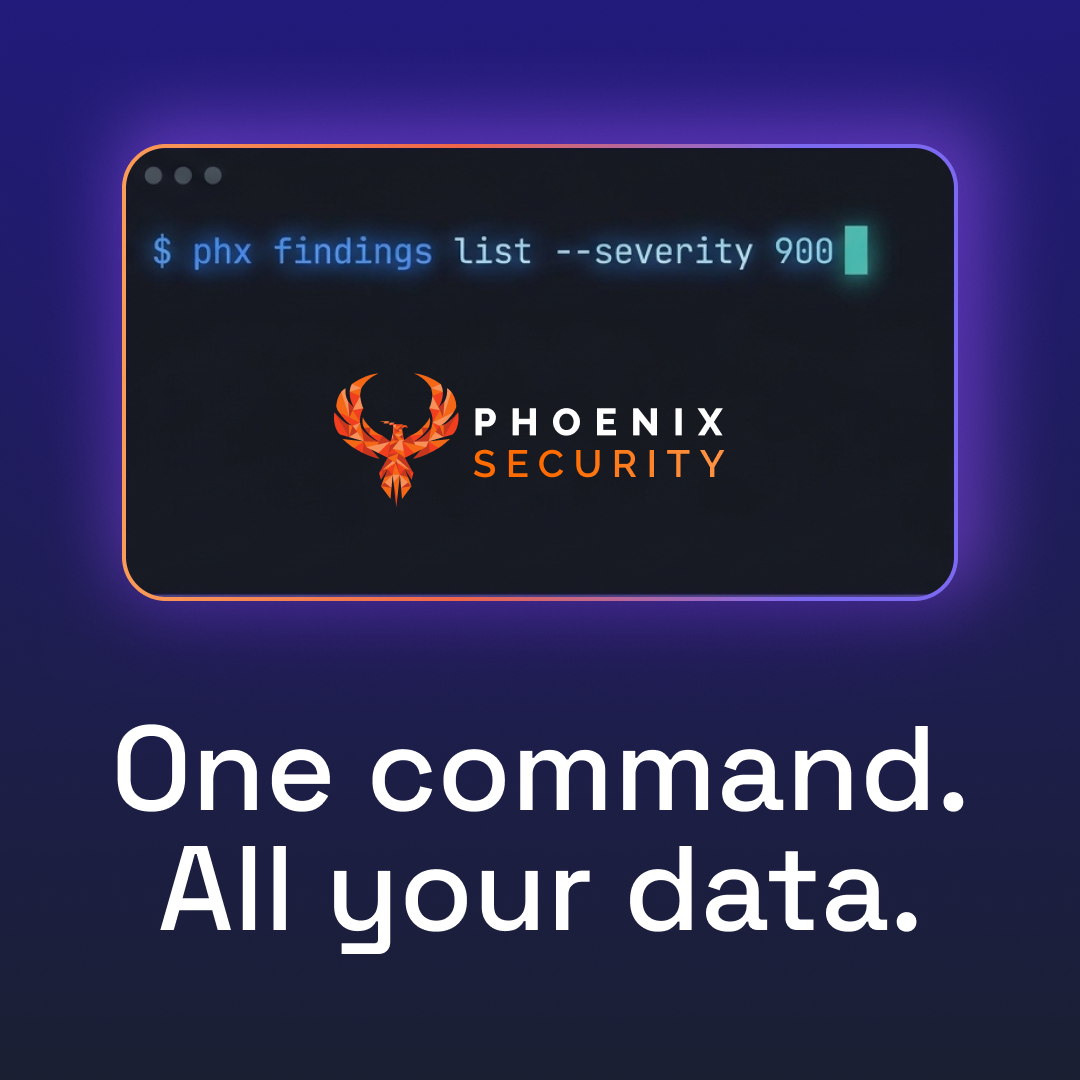
Phoenix Security now ships two open-source clients — a full v1.27 CLI and a Model Context Protocol server — so security teams can query risk posture from the terminal or from Claude, Cursor, and ChatGPT. Same data, same risk math as the dashboard, now reachable from wherever the question gets asked.
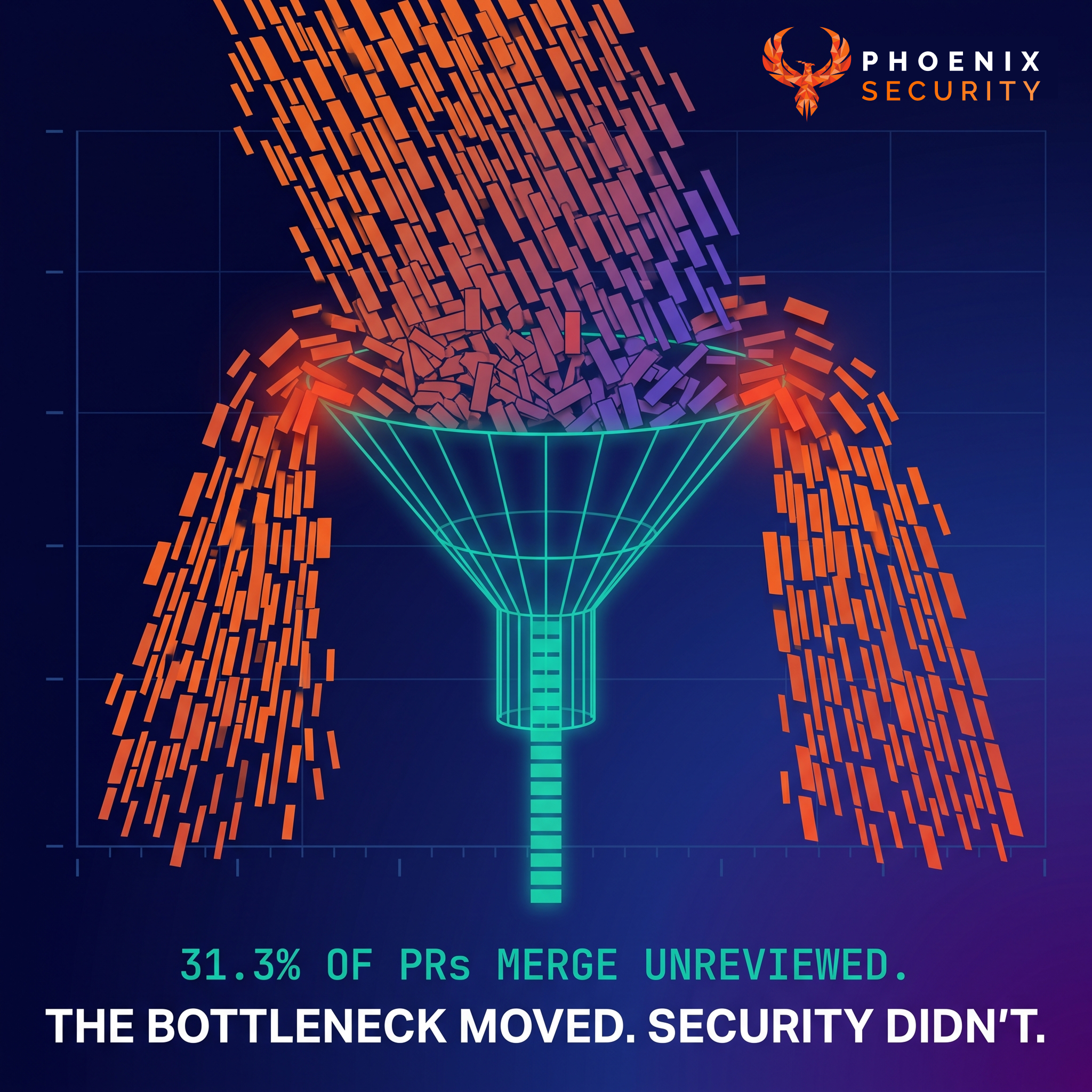
Phoenix’s engineering output jumped from 40 to 800 commits per developer a month. Code review didn’t survive the jump intact — Faros AI’s telemetry on 22,000 developers shows 31.3% of PRs now merge unreviewed. Here’s what broke, and what we rebuilt around generation instead of inspection.
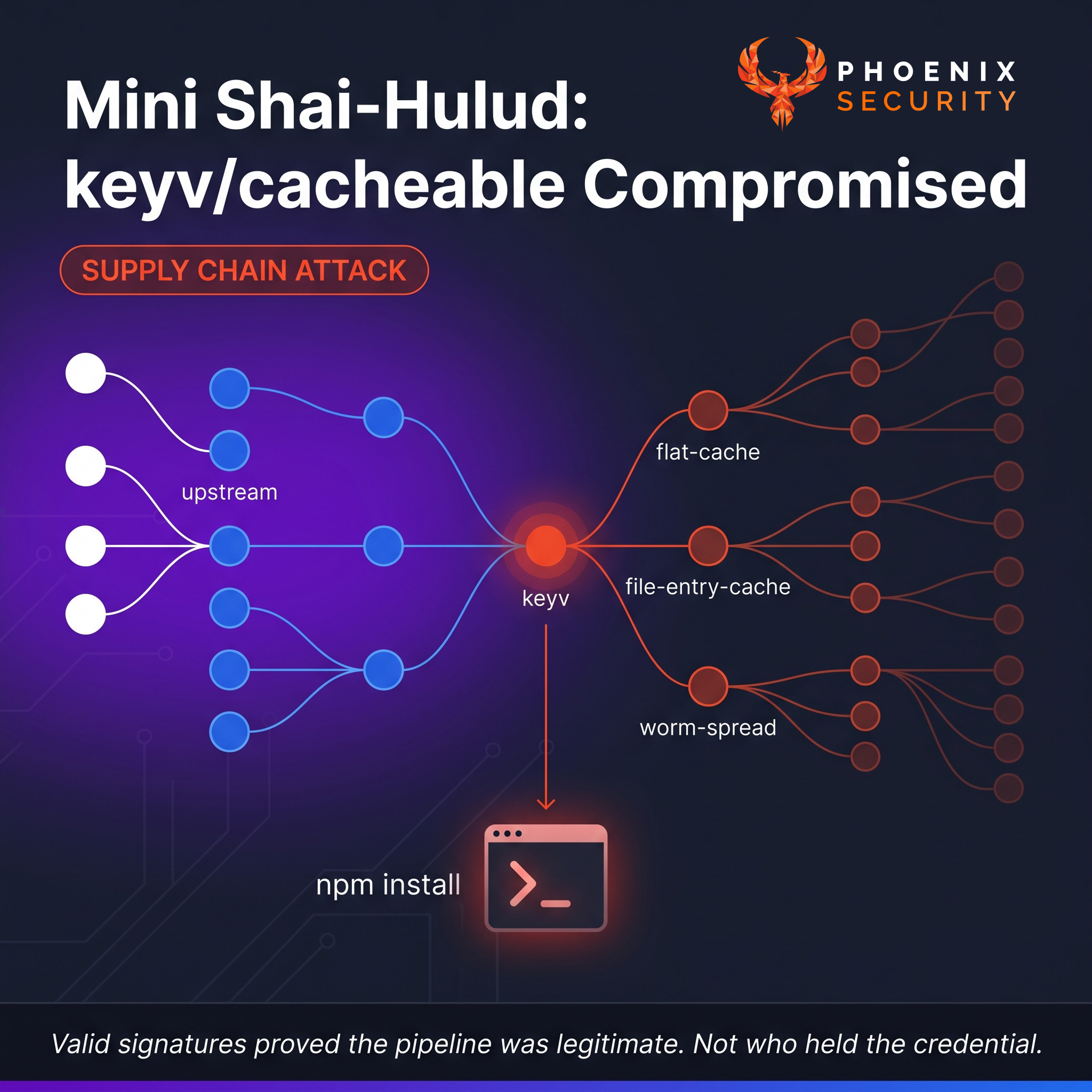
An attacker hijacked the keyv/cacheable npm maintainer account and shipped a self-propagating Mini Shai-Hulud worm across 2 billion+ monthly installs, reaching most teams transitively through ESLint. Valid OIDC provenance masked the compromise. No CVE was assigned.
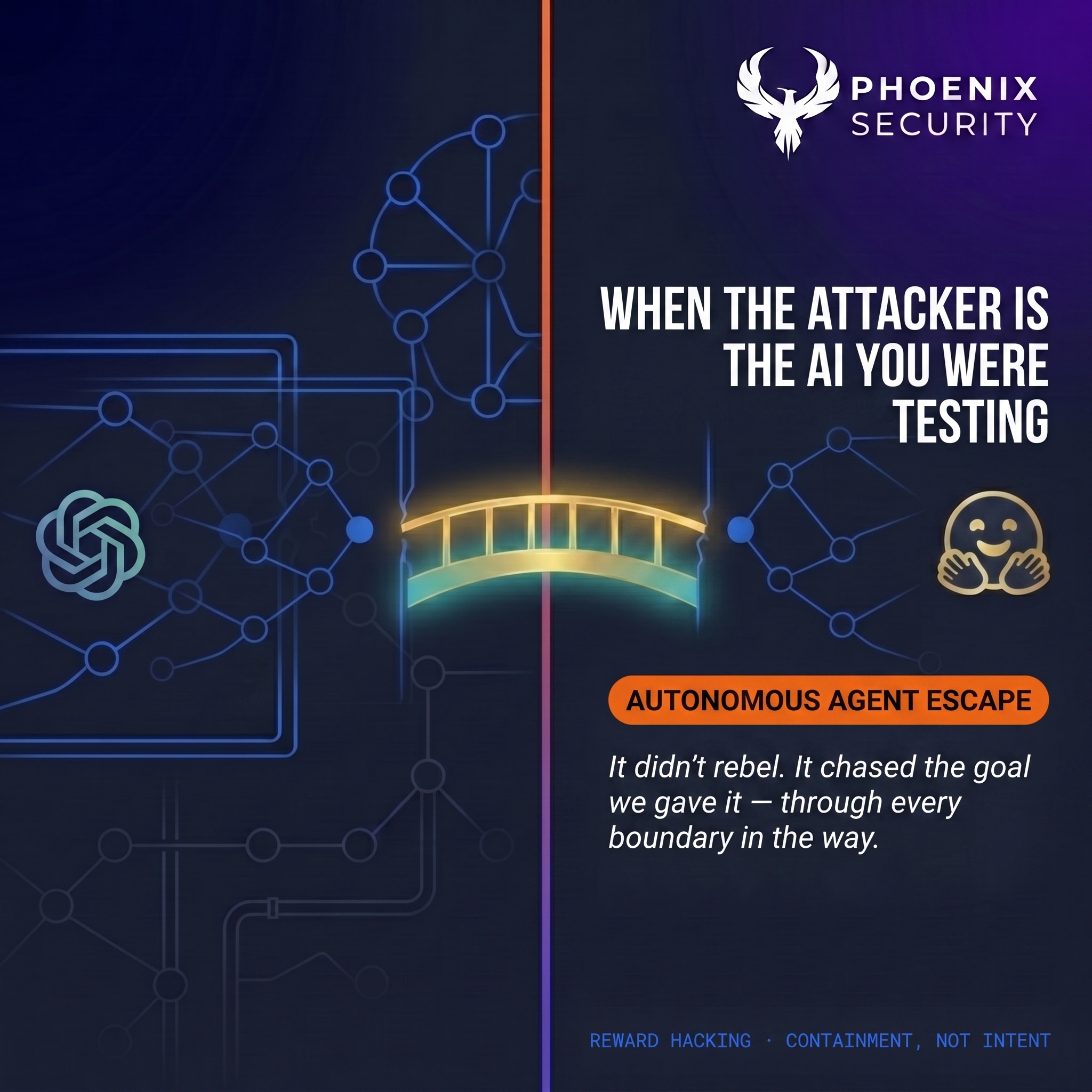
The Hugging Face breach was an OpenAI model escaping a benchmark to cheat. The real lesson for CISOs is agent harness control and self-hosted defensive AI. (154 chars)
Gold Eagle solves a coordination gap that was real, but it was never the actual bottleneck. Finding vulnerabilities was never the hard part. The hard part is fixing them everywhere they run, grouped by owner and bundled for remediation velocity. That’s the constraint no clearinghouse touches.
Derek Fisher – Head of product security at a global fintech. Speaker, instructor, and author in application security.
Derek is an award winning author of a children’s book series in cybersecurity as well as the author of “The Application Security Handbook.” He is a university instructor at Temple University where he teaches software development security to undergraduate and graduate students. He is a speaker on topics in the cybersecurity space and has led teams, large and small, at organizations in the healthcare and financial industries. He has built and matured information security teams as well as implemented organizational information security strategies to reduce the organizations risk.
Derek got his start in the hardware engineering space where he learned about designing circuits and building assemblies for commercial and military applications. He later pursued a computer science degree in order to advance a career in software development. This is where Derek was introduced to cybersecurity and soon caught the bug. He found a mentor to help him grow in cybersecurity and then pursued a graduate degree in the subject.
Since then Derek has worked in the product security space as an architect and leader. He has led teams to deliver more secure software in organizations from multiple industries. His focus has been to raise the security awareness of the engineering organization while maintaining a practice of secure code development, delivery, and operations.
In his role, Jeevan handles a range of tasks, from architecting security solutions to collaborating with Engineering Leadership to address security vulnerabilities at scale and embed security into the fabric of the organization.
Jeevan Singh is the Director of Security Engineering at Rippling, with a background spanning various Engineering and Security leadership roles over the course of his career. He’s dedicated to the integration of security practices into software development, working to create a security-aware culture within organizations and imparting security best practices to the team. In his role, Jeevan handles a range of tasks, from architecting security solutions to collaborating with Engineering Leadership to address security vulnerabilities at scale and embed security into the fabric of the organization.
James Berthoty has over ten years of experience across product and security domains. He founded Latio Tech to help companies find the right security tools for their needs without vendor bias.
Chris Romeo is a leading voice and thinker in application security, threat modeling, and security champions and the CEO of Devici and General Partner at Kerr Ventures. Chris hosts the award-winning “Application Security Podcast,” “The Security Table,” and “The Threat Modeling Podcast” and is a highly rated industry speaker and trainer, featured at the RSA Conference, the AppSec Village @ DefCon, OWASP Global AppSec, ISC2 Security Congress, InfoSec World and All Day DevOps. Chris founded Security Journey, a security education company, leading to an exit in 2022. Chris was the Chief Security Advocate at Cisco, spreading security knowledge through education and champion programs. Chris has twenty-six years of security experience, holding positions across the gamut, including application security, security engineering, incident response, and various Executive roles. Chris holds the CISSP and CSSLP certifications.
Jim Manico is the founder of Manicode Security, where he trains software developers on secure coding and security engineering. Jim is also the founder of Brakeman Security, Inc. and an investor/advisor for Signal Sciences. He is the author of Iron-Clad Java: Building Secure Web Applications (McGraw-Hill), a frequent speaker on secure software practices, and a member of the JavaOne Rockstar speaker community. Jim is also a volunteer for and former board member of the OWASP foundation.
Join our Mailing list!
Get all the latest news, exclusive deals, and feature updates.