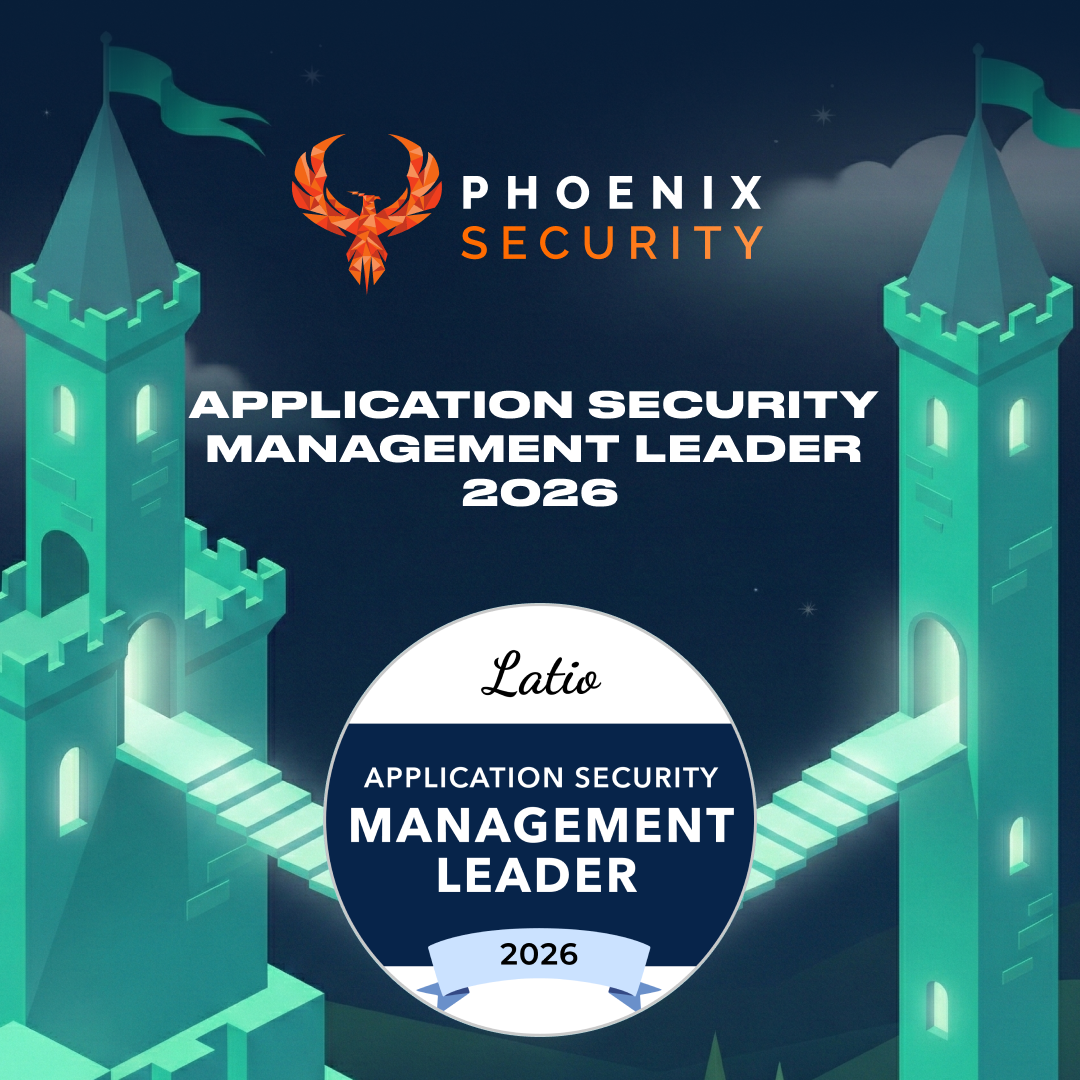
Phoenix Security Named Application Security Management Leader 2026 by Latio

Phoenix Security ASPM platform dashboard highlighting Application Security Management Leader 2026 recognition with code-to-cloud risk prioritization interface

London, UK – February 2026Phoenix Security today announced its recognition as Application Security Management Leader 2026 in the Latio Application Security Market Report 2026.

This recognition follows Phoenix Security’s 2025 distinction as a Cloud Security Innovator, reinforcing its leadership across ASPM and Continuous Threat Exposure Management (CTEM).

In the 2026 report, Latio positions Phoenix Security among the leading management platforms shaping the future of application security and exposure management, highlighting its strength in cloud and container-centric visibility.

Recognition Backed by Market Validation

The 2026 Latio report makes one thing clear:

  • Application security has consolidated into platform players.
  • Usability and backlog reduction matter more than raw scanner volume.
  • ASPM has evolved into broader vulnerability and exposure management programs.
  • Reachability, runtime context, and ownership attribution are becoming mandatory.

Phoenix Security was spotlighted for addressing the three questions most platforms fail to solve at scale:

  • Who owns the vulnerability?
  • Where is it running?
  • What is the fastest, lowest-impact fix?

Latio specifically highlighted Phoenix’s enterprise attribution model, code-to-cloud correlation, and reachability-driven prioritization as differentiators for large, regulated environments  .

From Recognition to Results

Awards matter. Outcomes matter more.

Phoenix Security’s leadership in ASPM and CTEM is validated by measurable customer impact across fintech, retail, and ad-tech.

 ClearBank | Fintech

ClearBank reduced container vulnerability noise by 98%, eliminated up to 99% of weekly critical vulnerabilities, and saved $2.6M in analyst time annually  .

“Phoenix helped us move from noise to precision. We now focus on what truly matters — and fix faster than ever before.”

— Neil Reed, Principal Security Engineer, ClearBank

ClearBank scaled its security function 10x without increasing headcount, shifting from alert overload to measurable remediation velocity.

Read the Case Study

Bazaarvoice | Retail

Bazaarvoice cut container vulnerabilities by 94%, reclaimed $6.3M in developer time, and automatically mapped over 32,000 rules to teams  .

“Phoenix is the only one that truly grasps the complexity of modern vulnerability management, considering both code and cloud vulnerabilities.”

— Nate Sanders, Head of Vulnerability Management, Bazaarvoice

Read the Case Study

Integral Ad Science (IAS) | Ad-Tech

IAS reduced active container vulnerabilities by 78% and cut SCA-to-container noise by 82.4%, reclaiming nearly $2M in developer time  .

Phoenix unified source-to-runtime visibility while preserving engineering velocity.

Read the Case Study

Why Phoenix Security Is Leading the ASPM Evolution

Latio’s 2026 report signals a shift:

ASPM is no longer “management without scanning.” It is evolving into continuous threat exposure management (CTEM) and universal vulnerability management  .

Phoenix Security anticipated that shift early.

The Differentiators Driving Leadership:

1. Enterprise-Grade Attribution

Programmatic CMDB-as-code integration and automated team inheritance eliminate orphan vulnerabilities.

2. Code-to-Cloud Reachability

Static + runtime reachability analysis reduces false positives by up to 91% across code, containers, and runtime.

3. Contextual Deduplication

Prevents duplicate findings across repositories, images, and environments — collapsing vulnerability volume dramatically.

4. 4D Risk Formula

Business criticality, exploitability, exposure, and deployment context combine into actionable prioritization.

5. AI-Powered Remediation

Phoenix AI Agents move from detection to execution — delivering remediation plans or GitHub autofixes directly into engineering workflows.

Momentum Into 2026

This latest recognition builds on prior industry validation, including:

  • Recognition by Gartner Digital Markets brands in 2024
  • Selection as a top ASPM provider in Voice of the Customer 2024

Phoenix Security continues to work alongside enterprises such as ClearBank, Bazaarvoice, IAS, and other global organizations to reduce vulnerability noise, accelerate remediation, and align security with business objectives.

Leadership Commentary

Francesco Cipollone, CEO & Co-Founder of Phoenix Security:

“Being recognized as Application Security Management Leader 2026 validates the direction we’ve taken from day one — context before automation, ownership before dashboards, and remediation over reporting.

Enterprises don’t need more scanners. They need precision, attribution, and execution. That’s what Phoenix delivers.”

About Phoenix Security

Phoenix Security is an Actionable ASPM platform designed for enterprises that demand measurable risk reduction across code, cloud, and runtime environments.

By combining contextual deduplication, reachability analysis, automated attribution, and AI-driven remediation, Phoenix transforms vulnerability management into a scalable, execution-focused discipline aligned with CTEM principles.

Francesco is an internationally renowned public speaker, with multiple interviews in high-profile publications (eg. Forbes), and an author of numerous books and articles, who utilises his platform to evangelize the importance of Cloud security and cutting-edge technologies on a global scale.

Discuss this blog with our community on Slack

Join our AppSec Phoenix community on Slack to discuss this blog and other news with our professional security team

From our Blog

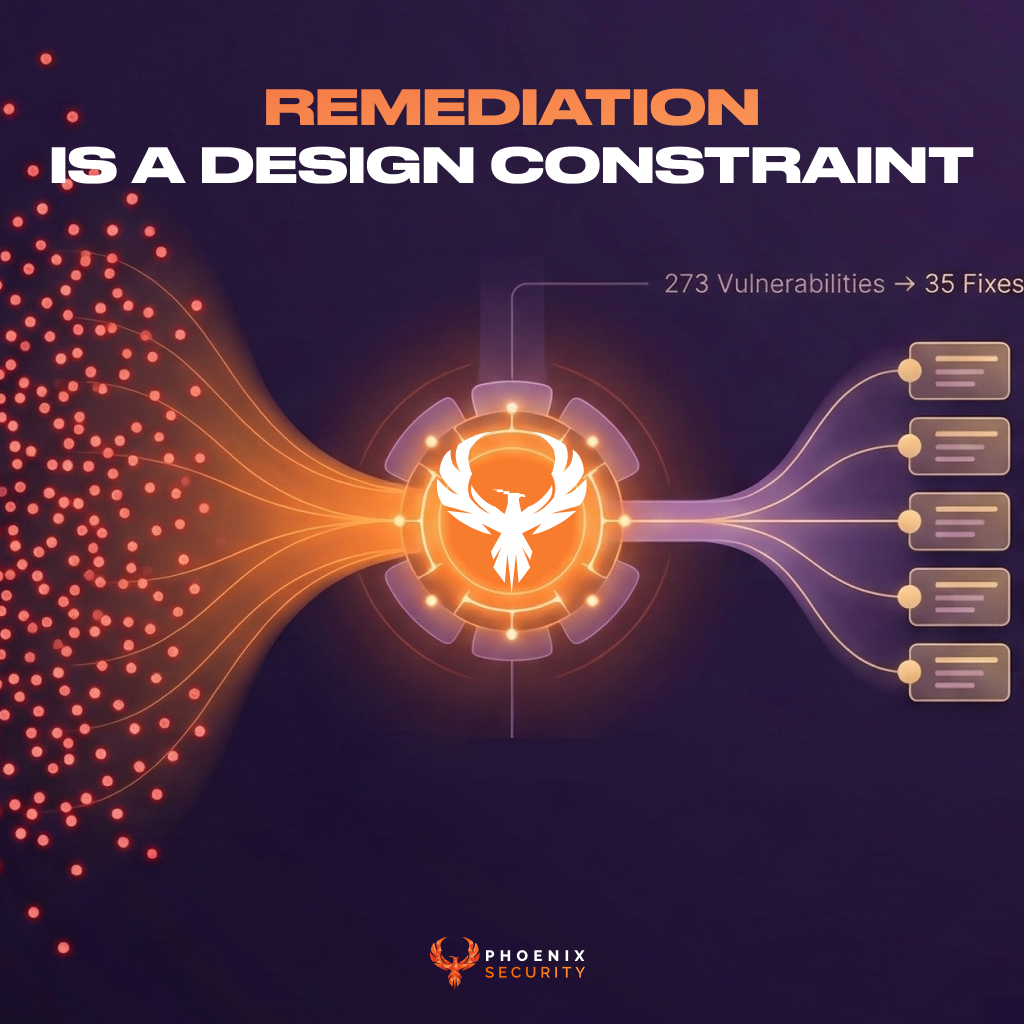
Phoenix Security turns thousands of vulnerability findings into a small set of high-impact remediation actions by prioritizing what is reachable, exploitable, and business-critical.
Francesco Cipollone
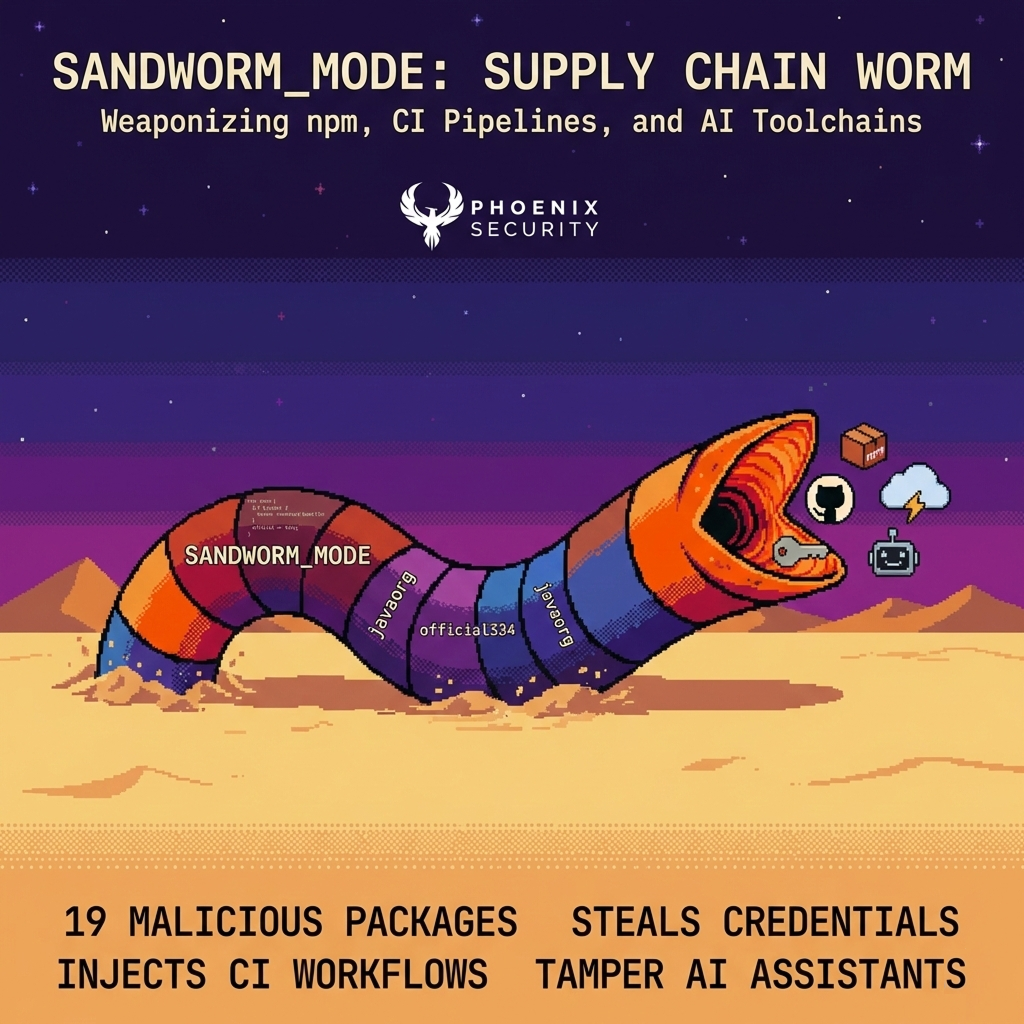
Sha1-Hulud V3.0 is not a typical vulnerability — it’s a malicious npm package that executes on install, steals CI and cloud credentials, and weaponizes npm and GitHub tokens to spread further. If it touched your build system, assume compromise.
Francesco Cipollone
A compression bug in MongoDB turns a core database feature into a silent data exfiltration channel. CVE-2025-14847, nicknamed MongoBleed, allows remote attackers to extract uninitialized heap memory without credentials. With zlib enabled by default and tens of thousands of instances exposed online, this is a real-world data breach waiting to happen.
Francesco Cipollone
React2Shell is a pre-auth, single-request RCE in React Server Components that turned Next.js App Router deployments into high-value internet targets overnight. This write-up breaks down the exploit chain, what attackers do after landing, and the fast-moving follow-up CVEs that forced teams to patch again.
Francesco Cipollone
React4Shell (also tracked as React2Shell and “Freight Night”) turns React Server Components into an unauthenticated remote code execution path via the Flight protocol. Public PoCs are circulating, scanning is spiking, and large-scale exploitation has already been reported. Patch fast, then verify what’s actually running.
Francesco Cipollone
Contents
Derek

Derek Fisher

Head of product security at a global fintech

Derek Fisher – Head of product security at a global fintech. Speaker, instructor, and author in application security.

Derek is an award winning author of a children’s book series in cybersecurity as well as the author of “The Application Security Handbook.” He is a university instructor at Temple University where he teaches software development security to undergraduate and graduate students. He is a speaker on topics in the cybersecurity space and has led teams, large and small, at organizations in the healthcare and financial industries. He has built and matured information security teams as well as implemented organizational information security strategies to reduce the organizations risk.

Derek got his start in the hardware engineering space where he learned about designing circuits and building assemblies for commercial and military applications. He later pursued a computer science degree in order to advance a career in software development. This is where Derek was introduced to cybersecurity and soon caught the bug. He found a mentor to help him grow in cybersecurity and then pursued a graduate degree in the subject.

Since then Derek has worked in the product security space as an architect and leader. He has led teams to deliver more secure software in organizations from multiple industries. His focus has been to raise the security awareness of the engineering organization while maintaining a practice of secure code development, delivery, and operations.

In his role, Jeevan handles a range of tasks, from architecting security solutions to collaborating with Engineering Leadership to address security vulnerabilities at scale and embed security into the fabric of the organization.

Jeevan Singh

Jeevan Singh

Founder of Manicode Security

Jeevan Singh is the Director of Security Engineering at Rippling, with a background spanning various Engineering and Security leadership roles over the course of his career. He’s dedicated to the integration of security practices into software development, working to create a security-aware culture within organizations and imparting security best practices to the team.
In his role, Jeevan handles a range of tasks, from architecting security solutions to collaborating with Engineering Leadership to address security vulnerabilities at scale and embed security into the fabric of the organization.

James

James Berthoty

Founder of Latio Tech

James Berthoty has over ten years of experience across product and security domains. He founded Latio Tech to help companies find the right security tools for their needs without vendor bias.

christophe

Christophe Parisel

Senior Cloud Security Architect

Senior Cloud Security Architect

Chris

Chris Romeo

Co-Founder
Security Journey

Chris Romeo is a leading voice and thinker in application security, threat modeling, and security champions and the CEO of Devici and General Partner at Kerr Ventures. Chris hosts the award-winning “Application Security Podcast,” “The Security Table,” and “The Threat Modeling Podcast” and is a highly rated industry speaker and trainer, featured at the RSA Conference, the AppSec Village @ DefCon, OWASP Global AppSec, ISC2 Security Congress, InfoSec World and All Day DevOps. Chris founded Security Journey, a security education company, leading to an exit in 2022. Chris was the Chief Security Advocate at Cisco, spreading security knowledge through education and champion programs. Chris has twenty-six years of security experience, holding positions across the gamut, including application security, security engineering, incident response, and various Executive roles. Chris holds the CISSP and CSSLP certifications.

jim

Jim Manico

Founder of Manicode Security

Jim Manico is the founder of Manicode Security, where he trains software developers on secure coding and security engineering. Jim is also the founder of Brakeman Security, Inc. and an investor/advisor for Signal Sciences. He is the author of Iron-Clad Java: Building Secure Web Applications (McGraw-Hill), a frequent speaker on secure software practices, and a member of the JavaOne Rockstar speaker community. Jim is also a volunteer for and former board member of the OWASP foundation.

Join our Mailing list!

Get all the latest news, exclusive deals, and feature updates.

The IKIGAI concept