LAS VEGAS, 5 August 2026. Phoenix Security, timed to Black Hat USA 2026, is releasing Phoenix Security Exploit Hunt: an AI red team that lives inside your code graph, takes its targets from a live threat model, and reports a finding only after it has written and validated a runnable proof-of-concept exploit for it. It runs continuously, on every pull request, or on demand.
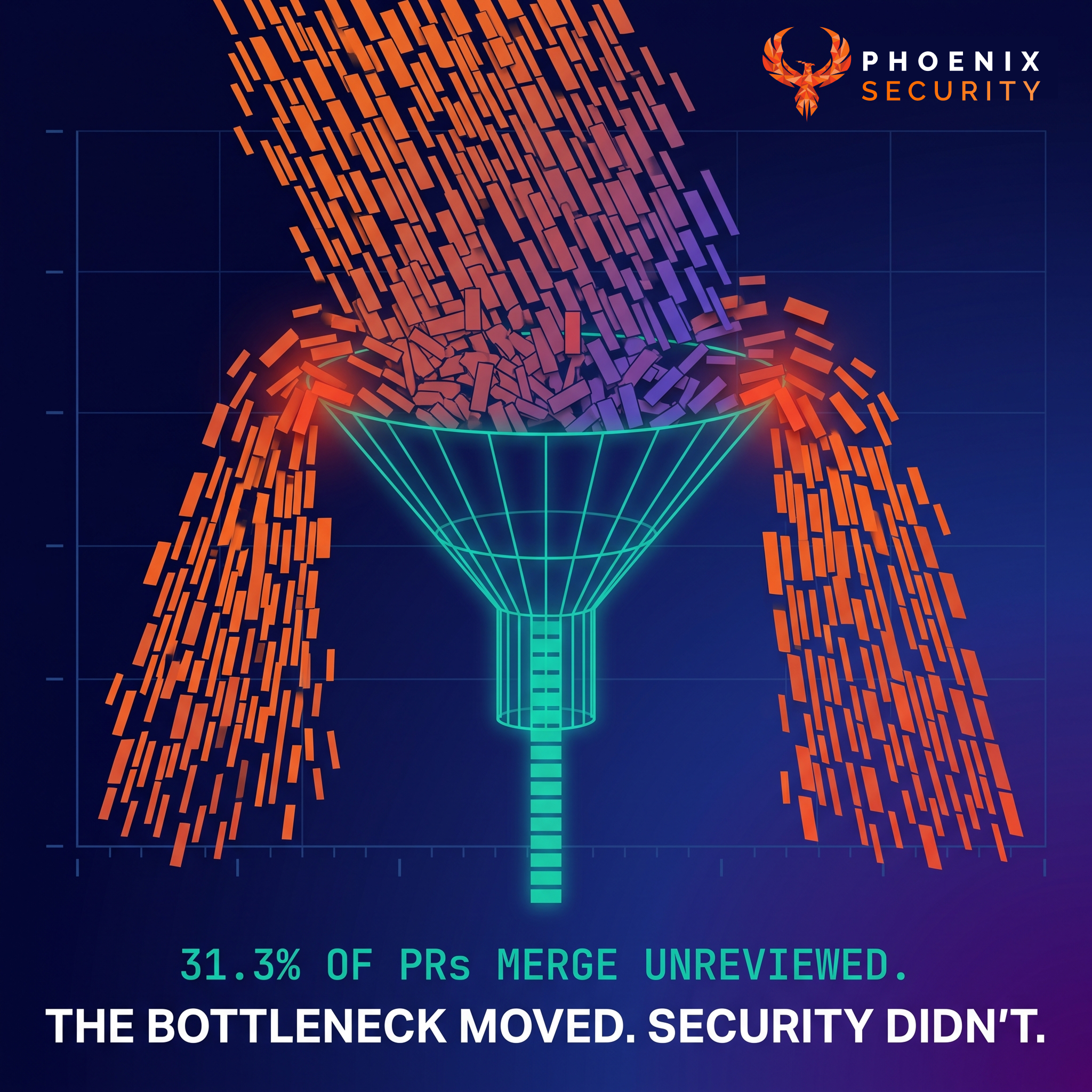
Most organizations already own two tools that touch this problem. Scanners match the shape of code rather than its reachability, and the volume they produce teaches developers to ignore them. Pentesters are sharp and human, but they sample what they have time to check, once or twice a year, and hand back prose that a team still has to reproduce before anyone can act on it. Neither one proves that a given finding is exploitable today. Exploit Hunt sits underneath both: it narrows scanner output to what is provably reachable and runs the attacker exercise on a repeating schedule, so human pentesters keep the work that needs judgment.
Contents
ToggleWhat shipped
Before any model runs, Phoenix has already built a call-graph, taint, and knowledge graph of the repository. Exploit Hunt ranks which files are worth an adversary’s time using PageRank centrality, taint density, cyclomatic complexity, prior SAST signal, live external connectivity, and reachable SCA vulnerabilities. It then hands the workspace’s STRIDE threat model — with its trust boundaries and attack-path chains — to the attacker as direct reference context. Adversarial effort lands on the files an attacker would work on first, not spread evenly across the repository.
Three personas run in sequence, each with deliberately restricted visibility into what the others did. HUNT, the attacker, gets the full source plus the graph and threat model, and files a vulnerability report with a CWE, a severity, and an exploitation path. JUDGE, the skeptic, re-assesses that report independently, without the graph context that produced it, and returns CONFIRMED, DISPUTED, or INSUFFICIENT_EVIDENCE. VERIFY, the exploit developer, then tries to weaponize whatever survived. It never sees JUDGE’s verdict, and its output is a runnable exploit script plus a validation document. A candidate that fails either stage stays out of the report.
Each confirmed finding ships as that runnable exploit script and validation document, auto-ingested into the exploit store and retrievable through the API. That removes the step security teams spend most of their calendar time on: proving a finding is real before an engineer will prioritize it.
Exploit Hunt can be triggered manually on demand. It also runs as a native GitHub pull-request gate, posting a per-exploit comment and setting a commit check, so a confirmed exploitable finding can block a merge the way a failing test does. On a daily, weekly, or monthly schedule, files changed since the last run receive a differential priority boost.
Verified in internal testing: against the Vulnerable-App multi-repo corpus, Exploit Hunt turned three target files into nine confirmed exploits, covering JWT handling, cross-site scripting, and annotation injection, across three passes and 19,941 tokens, budget-capped. In the same run, every candidate in one target file was independently DISPUTED by JUDGE and correctly never reached the exploit-writing stage.
What this doesn’t replace, on purpose
Exploit Hunt does not replace human pentesting for business-logic abuse, social engineering, or creative multi-step attack chains. Its target is the cadence-and-cost problem and the noise problem: the once-a-year snapshot, the linear cost of scope, and the backlog of unproven findings nobody can action. Findings are adversarially verified and proven exploitable, and the run happens on a schedule the team sets. That is a narrower claim than complete coverage, and Phoenix is not making the wider one.
Guardrails ship with it. Keys stay bring-your-own by default, each run is spend-capped and backed by a durable skip ledger, and live scans are opt-in rather than implicit. Findings are grouped and de-duplicated, and every run is organization-scoped and fails closed on foreign or malformed references.
“The economics of security had to change. Scanning tells you a pattern looks dangerous. A pentester tells you, once a year, what they had time to check. Exploit Hunt aims a live threat model at your real attack surface, runs two AI adversaries that are not allowed to agree, and writes a working exploit before it calls anything a finding. What lands in front of an engineer is an attack path with a script attached — and that is the thing they will actually pick up. To me, that is what closing the loop means.”
— Francesco Cipollone, CEO & CISO, Phoenix Security
Availability
Exploit Hunt is available in Phoenix Purple now.
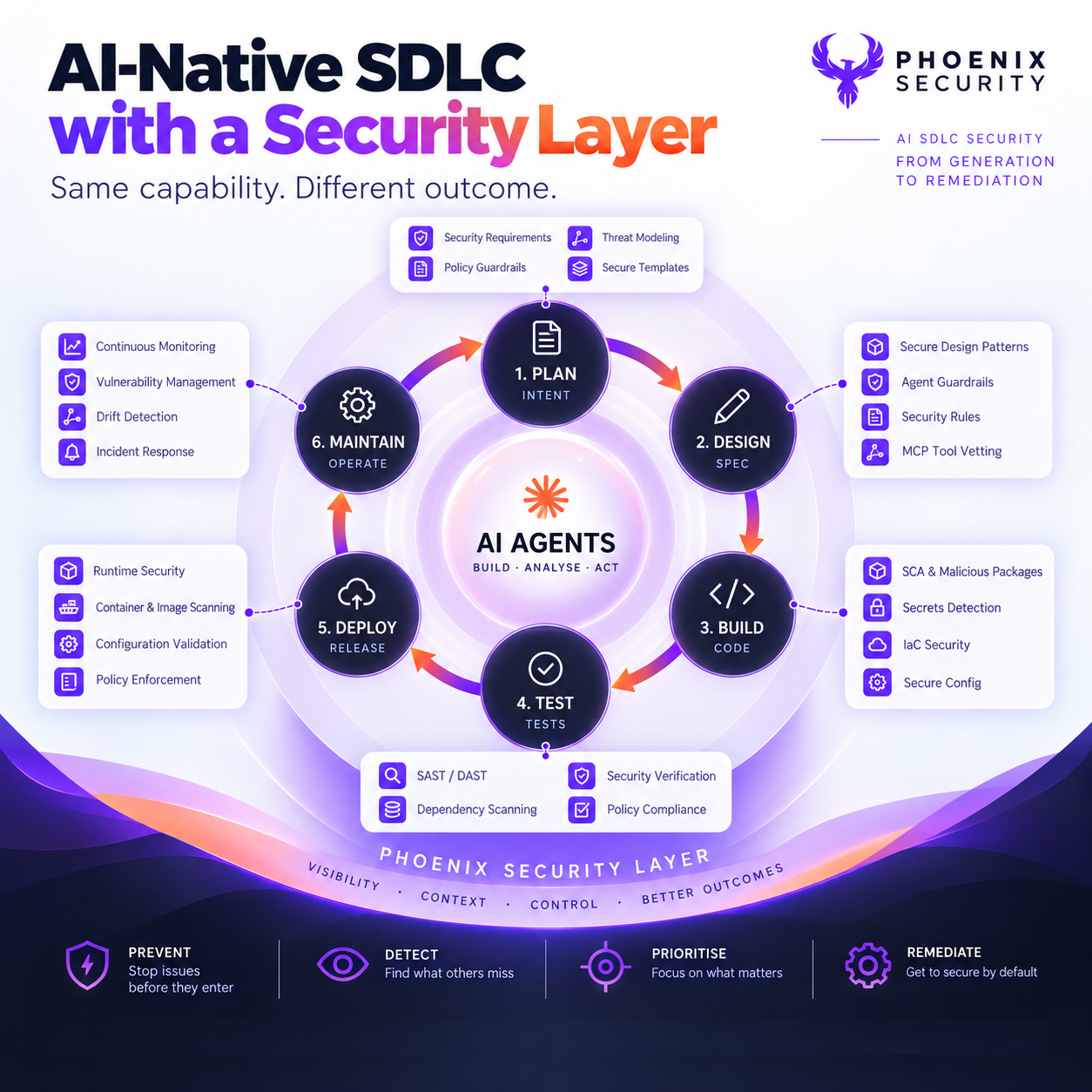
The full Agentic SDLC Security control framework.
Phoenix Security is at Black Hat USA 2026, Booth 5702. Schedule a live meeting.
About Phoenix Security
Phoenix Security is an Actionable ASPM platform that correlates vulnerabilities from code to cloud, turning fragmented findings into a single, prioritized remediation flow. Through reachability analysis, contextual deduplication, and risk-based prioritization, Phoenix helps security and engineering teams cut the noise, fix what counts, and scale without scaling headcount.