















AGENTIC SDLC SECURITY

Prevent first
Prove what's real
Fix what matters

Phoenix connects code, cloud, and runtime to catch risk earlier, confirm what's actually exploitable, and route it to the right owner — with a clear path to fix and humans in control.

Trusted by 380+ companies · SOC 2 Type II · ISO 27001

96–99%

Fewer weekly critical findings, measured at ClearBank.

32K+

Ownership rules mapped straight to teams at Bazaarvoice.

82.4%

Less SCA-to-container noise for a global ad-tech platform.

Recent clients & partners

Admiral Bazaarvoice Capco ClearBank IBM Optimizely Q2 Ryanair Twinstake

The problem

More findings aren't progress

Every scanner adds volume. Almost none of them add a decision.

A backlog with ten thousand items looks thorough. It just means nobody's read past the first page.

Teams end up guessing which ones actually matter. That takes hours, every single week.

Too much noiseThousands of findings, no way to tell which ones are real. Teams stop trusting the queue before they finish reading it.

No clear ownerA finding without a team attached sits in a shared backlog until someone finally claims it — or nobody does.

No safe fixEven when risk is confirmed, shipping the fix without breaking something else becomes its own project.

Where teams get stuck

Most teams stall right after they prove risk is real

Deciding what matters, then what to do about it, is where the process breaks down — not finding risk in the first place.

One platform, one loop

Finding risk is only the beginning

Every module feeds the same remediation loop, so signal, code, packages and fixes land as one queue — not five disconnected backlogs.

Phoenix Platform Workbench Live modules · one remediation loop
track_changes
01 Discover
Phoenix Blue
code
02 Explain
Phoenix Purple
shield
03 Protect
Phoenix Blue Shield
assignment
04 Prevent
Phoenix Orange
build
05 Fix
Phoenix Green
track_changes
Discover
Phoenix Blue · Intelligence
boltLive intel

The awareness layer. Catches package and dependency threat signals before they spread through your pipeline.

blue scan --module=intelligencelive evidence
$ phoenix ingest --feeds
 4 intelligence sources synced: KEV, EPSS, EUVD, OSV
! new exploit added to KEV: CVE-2025-41320
 escalating to Orange for triage
Works alongside or replaces
Recorded FutureGreyNoiseManual CVE triage
Explore Phoenix Blue →
code
Explain
Phoenix Purple · Code analysis
auto_fix_highAutofix-ready

Graph-native SAST and SCA. Scans every PR with full repo context and proves whether a vulnerable function actually sits on a reachable call path.

purple scan --module=sastlive evidence
$ phoenix scan --changed-files
 graph loaded: 1,918 nodes · 2,720 edges
! SQL Injection in query builder
 path proven: Tainted input reaches raw query · /api/orders
 opening safe-to-review fix PR
Works alongside or replaces
VeracodeCheckmarxSemgrepEndor Labs
See how Purple works →
shield
Protect
Phoenix Blue Shield · Enforcement
boltReal-time

The same intelligence applied as a live gate — blocking malicious or typosquatted packages at install time, before they ever reach a build.

shield enforce --surface=installlive evidence
$ npm install left-pad-evil
! blocked: typosquat detected (edit-distance 1 from left-pad)
 0 malicious packages reached the lockfile
 logged to audit trail
Works alongside or replaces
SocketManual allowlisting
Explore Blue Shield →
assignment
Prevent
Phoenix Orange · Prioritization
boltAuto-routed

One backlog from 30+ scanners. Deduplicated and normalized into a single risk-ranked queue, so noise never buries what actually matters.

orange triage --queue=alllive evidence
$ phoenix ingest --scanners=30
 112,000 raw findings deduplicated to 7,300
! 300 marked reachable and business-critical
 auto-assigned to owning teams
Works alongside or replaces
DefectDojoSpreadsheet triageJira backlog
Explore Phoenix Orange →
build
Fix
Phoenix Green · Remediation
auto_fix_highAutofix-ready

AI agents draft the fix. Humans approve every merge. Verified fix plans and opt-in pull requests move remediation at scale.

green remediate --tier=autofixlive evidence
$ phoenix fix --finding=CVE-2024-38821
 fix bundle generated: 3 files, 1 dependency bump
 safe-to-merge: tests pass, no breaking change
 PR opened, awaiting review
Works alongside or replaces
Manual patchingAd-hoc dependency bumps

The awareness layer. Catches package and dependency threat signals before they spread through your pipeline.

blue scan --module=intelligencelive evidence
$ phoenix ingest --feeds
 4 intelligence sources synced: KEV, EPSS, EUVD, OSV
! new exploit added to KEV: CVE-2025-41320
 escalating to Orange for triage
Works alongside or replaces
Recorded FutureGreyNoiseManual CVE triage
Explore Phoenix Blue →

Graph-native SAST and SCA. Scans every PR with full repo context and proves whether a vulnerable function actually sits on a reachable call path.

purple scan --module=sastlive evidence
$ phoenix scan --changed-files
 graph loaded: 1,918 nodes · 2,720 edges
! SQL Injection in query builder
 path proven: Tainted input reaches raw query · /api/orders
 opening safe-to-review fix PR
Works alongside or replaces
VeracodeCheckmarxSemgrepEndor Labs
See how Purple works →

The same intelligence applied as a live gate — blocking malicious or typosquatted packages at install time, before they ever reach a build.

shield enforce --surface=installlive evidence
$ npm install left-pad-evil
! blocked: typosquat detected (edit-distance 1 from left-pad)
 0 malicious packages reached the lockfile
 logged to audit trail
Works alongside or replaces
SocketManual allowlisting
Explore Blue Shield →

One backlog from 30+ scanners. Deduplicated and normalized into a single risk-ranked queue, so noise never buries what actually matters.

orange triage --queue=alllive evidence
$ phoenix ingest --scanners=30
 112,000 raw findings deduplicated to 7,300
! 300 marked reachable and business-critical
 auto-assigned to owning teams
Works alongside or replaces
DefectDojoSpreadsheet triageJira backlog
Explore Phoenix Orange →

AI agents draft the fix. Humans approve every merge. Verified fix plans and opt-in pull requests move remediation at scale.

green remediate --tier=autofixlive evidence
$ phoenix fix --finding=CVE-2024-38821
 fix bundle generated: 3 files, 1 dependency bump
 safe-to-merge: tests pass, no breaking change
 PR opened, awaiting review
Works alongside or replaces
Manual patchingAd-hoc dependency bumps

The Token Ledger

What is scanner noise actually costing you?

4,000 findings / month
≈ 340 hours

a year spent triaging noise that was never exploitable

See the full breakdown on The Token Ledger →

What customers say

Security that fits the way teams actually work

Named engineers and CISOs, at named companies, on what changed once Phoenix was in the loop.

These teams already trust Phoenix with their risk. See what it finds in yours.

See Phoenix in Action

Control

AI moves fast
You stay in control

Every fix Phoenix proposes is reviewable before it ships. Nothing merges without a human decision.

What Phoenix automates
Ingest and deduplicate findings
30+ scanners, one backlog
Prioritize by real exposure
4D risk: exploitability + reachability + business context
Draft the fix
Verified fix plans, opt-in PRs
What stays with your team
Review and approve every fix
No auto-merge, ever
Grant time-bound exceptions
Audited, not silent
Own the final decision
Phoenix proposes. Your team decides.

Outcomes

Real risk removed. Measured in production.

Not better dashboards — measurable reduction in critical exposure and time-to-fix.

98%

Critical container vulnerabilities removed

ClearBank

91%

Noise reduction with reachability analysis

Phoenix reachability release

$6.3M

Developer time saved

Bazaarvoice

543M+

Vulnerabilities removed across the platform

Tracked across code, containers, cloud & runtime

INSIGHTS and RESEARCH

From research to remediation

Practical guidance on agentic remediation, exposure prioritization, and modern application security.

Get to know more

Frequently asked questions

Lorem ipsum dolor sit amet, consectetur adipiscing elit. Ut elit tellus, luctus nec ullamcorper mattis, pulvinar dapibus leo.

Scanning tools find vulnerabilities. ASPM tells you which ones actually matter. Application Security Posture Management connects findings from SAST, SCA, containers, and cloud into one normalized model — then adds runtime context, ownership, and business risk. The result: 98% less noise, and a clear path to remediation. Scanners give you a list. ASPM gives you a plan.

No. Phoenix ingests findings from 30+ scanners — Snyk, Wiz, Qualys, Prisma, and more — without ripping anything out. You keep your existing tools. Phoenix deduplicates, normalizes, and adds the context your scanners can’t provide: reachability, ownership, and exploit intelligence. Most teams reduce their critical backlog by over 90% without changing a single scanner.

Phoenix builds a living ownership graph from your repos, pipelines, service catalogs, and on-call data. It maps every vulnerability to the team responsible — not a shared queue. As your org changes, the graph self-heals. No more “who owns this?” tickets. Every finding has an owner before it reaches a developer.

Most teams prioritize by CVSS score. Phoenix prioritizes by what’s actually running and reachable in production right now. A critical CVE in a container that never runs is not your problem. A medium CVE in a reachable service with a public exploit is. Phoenix combines runtime reachability, CISA KEV, EPSS, and threat intel to surface the 2–3% of findings that represent real risk.

Phoenix AI agents analyze the full dependency graph, identify the minimum-impact upgrade path, and generate a fix plan. They open opt-in PRs — nothing merges without developer approval. Agents run campaigns across thousands of repos simultaneously, but every fix goes through your existing review process. Humans stay in control at every step.

Yes. Phoenix remediates across code (SAST), containers, cloud misconfigurations, and infrastructure. The AI agent understands the full stack — it doesn’t just bump a package version. For container vulnerabilities, teams have seen 98% reduction. For cloud critical findings, Phoenix generates fix plans that account for blast radius and compensating controls.

Most teams connect their first scanner in under 30 minutes. Within 24 hours, Phoenix has deduplicated findings, assigned ownership, and surfaced the top 10 risks by reachable exposure. ClearBank reduced their critical container vulnerability count to zero within weeks. Bazaarvoice cut their critical exposure by 94%. You don’t need a 6-month implementation to see results.

Ready for the next step

See what Phoenix
would fix first

Bring your backlog. We'll show you what's actually reachable, who owns it, and what ships first.

Trusted by 380+ security teams

Customer's Choice (Gartner)

5-star reviews from AppSec and InfraSec teams.

Major Player (IDC MarketScape)

Named a Major Player in the 2025 IDC MarketScape for ASPM.

Application Security Management Leader

Named Application Security Management Leader in the 2026 Latio report.

Copyright © 2026Phoenix.security. All rights reserved.
Derek

Derek Fisher

Head of product security at a global fintech

Derek Fisher – Head of product security at a global fintech. Speaker, instructor, and author in application security.

Derek is an award winning author of a children’s book series in cybersecurity as well as the author of “The Application Security Handbook.” He is a university instructor at Temple University where he teaches software development security to undergraduate and graduate students. He is a speaker on topics in the cybersecurity space and has led teams, large and small, at organizations in the healthcare and financial industries. He has built and matured information security teams as well as implemented organizational information security strategies to reduce the organizations risk.

Derek got his start in the hardware engineering space where he learned about designing circuits and building assemblies for commercial and military applications. He later pursued a computer science degree in order to advance a career in software development. This is where Derek was introduced to cybersecurity and soon caught the bug. He found a mentor to help him grow in cybersecurity and then pursued a graduate degree in the subject.

Since then Derek has worked in the product security space as an architect and leader. He has led teams to deliver more secure software in organizations from multiple industries. His focus has been to raise the security awareness of the engineering organization while maintaining a practice of secure code development, delivery, and operations.

In his role, Jeevan handles a range of tasks, from architecting security solutions to collaborating with Engineering Leadership to address security vulnerabilities at scale and embed security into the fabric of the organization.

Jeevan Singh

Jeevan Singh

Founder of Manicode Security

Jeevan Singh is the Director of Security Engineering at Rippling, with a background spanning various Engineering and Security leadership roles over the course of his career. He’s dedicated to the integration of security practices into software development, working to create a security-aware culture within organizations and imparting security best practices to the team.
In his role, Jeevan handles a range of tasks, from architecting security solutions to collaborating with Engineering Leadership to address security vulnerabilities at scale and embed security into the fabric of the organization.

James

James Berthoty

Founder of Latio Tech

James Berthoty has over ten years of experience across product and security domains. He founded Latio Tech to help companies find the right security tools for their needs without vendor bias.

christophe

Christophe Parisel

Senior Cloud Security Architect

Senior Cloud Security Architect

Chris

Chris Romeo

Co-Founder
Security Journey

Chris Romeo is a leading voice and thinker in application security, threat modeling, and security champions and the CEO of Devici and General Partner at Kerr Ventures. Chris hosts the award-winning “Application Security Podcast,” “The Security Table,” and “The Threat Modeling Podcast” and is a highly rated industry speaker and trainer, featured at the RSA Conference, the AppSec Village @ DefCon, OWASP Global AppSec, ISC2 Security Congress, InfoSec World and All Day DevOps. Chris founded Security Journey, a security education company, leading to an exit in 2022. Chris was the Chief Security Advocate at Cisco, spreading security knowledge through education and champion programs. Chris has twenty-six years of security experience, holding positions across the gamut, including application security, security engineering, incident response, and various Executive roles. Chris holds the CISSP and CSSLP certifications.

jim

Jim Manico

Founder of Manicode Security

Jim Manico is the founder of Manicode Security, where he trains software developers on secure coding and security engineering. Jim is also the founder of Brakeman Security, Inc. and an investor/advisor for Signal Sciences. He is the author of Iron-Clad Java: Building Secure Web Applications (McGraw-Hill), a frequent speaker on secure software practices, and a member of the JavaOne Rockstar speaker community. Jim is also a volunteer for and former board member of the OWASP foundation.

Join our Mailing list!

Get all the latest news, exclusive deals, and feature updates.

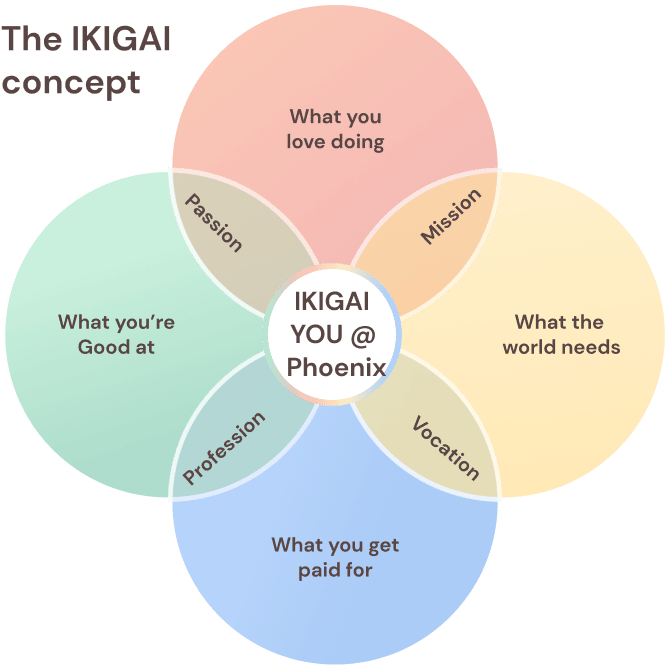
The IKIGAI concept
Protected By
Shield Security PRO